

Labelling requirements under the AI Act: what the new EU guidelines clarify for deepfakes

The European Commission has published an initial draft of guidelines on the transparency obligations under Article 50 of the AI Act, clarifying the labelling requirements under the AI Act for AI-generated deepfakes. Since these obligations will apply from 2 August 2026, deployers should familiarise themselves with the interpretation now. We explain when AI-generated content qualifies as a deepfake, what exactly must be disclosed and which exceptions apply to creative works.

Content
- What do the new EU guidelines regulate, and how binding are they?
- When does AI-generated content qualify as a deepfake?
- What must deployers disclose under the labelling obligation?
- What exception applies to artistic and satirical works?
- What matters in the case-by-case assessment?
- Conclusion: The labelling requirements under the AI Act are becoming more concrete, but deployers should still act now
- Frequently Asked Questions (FAQ)
What do the new EU guidelines regulate, and how binding are they?
On 8 May 2026, the European Commission published a consultation draft of guidelines on the implementation of the transparency obligations under Article 50 of the AI Act. The draft is intended to provide guidance to authorities, providers and deployers, but is not itself legally binding.
The draft addresses the transparency obligations that will become applicable from 2 August 2026 and interprets the undefined legal terms in Article 50. In addition to “deepfake”, this also includes editorial responsibility for AI-assisted content. Practical examples supplement the interpretation. The consultation period ran until 3 June 2026; a final version is expected before 2 August 2026.
The AI Act itself remains decisive, Regulation (EU) 2024/1689. Its ultimately binding interpretation is reserved to the Court of Justice of the European Union, and a corresponding ruling may still take years.
This is precisely why the draft is valuable in practice: until there is clarification from the highest court, it offers the only structured interpretative guidance. This article focuses on Article 50(4) of the AI Act, which regulates the labelling of deepfakes and therefore draws the line between permissible AI use, mandatory labelling and possible deception.
In short: the draft is not binding, but it is currently the best point of reference for interpreting the labelling requirements under the AI Act.
Newsletter
For your Inbox
Current updates and important information on topics such as data law, information security, technology, artificial intelligence, and much more. (only in German)
When does AI-generated content qualify as a deepfake?
Under Article 3(60) of the AI Act, a deepfake is AI-generated or manipulated image, audio or video content that resembles existing persons, objects, places, entities or events and would falsely appear to a person to be authentic or truthful. The draft clarifies this definition using three criteria.
First, significant resemblance. According to Recital 134, there must be a high degree of resemblance between the deepfake content and the simulated reference point. Complete identity is not required. The assessment is carried out by the deployer on a case-by-case basis using an objective comparison.
Second, realism. The reference point depicted must be realistic, meaning that it exists in reality or could at least have existed, including historical events. Content that violates the laws of nature or depicts biologically unrecognised forms of life is not covered. An AI-generated image of a human flying without assistance, a dragon or a talking animal therefore does not fall within the definition of a deepfake.
Third, the categories covered. The draft allocates the five categories in Article 3(60) — persons, objects, places, entities and events — more specifically:
| Category | What it covers |
|---|---|
| Persons | Realistic natural persons, including digital replicas and realistic AI avatars |
| Objects | Inanimate material objects such as buildings, artworks, machinery and consumer goods |
| Places | Realistic locations |
| Entities | Non-human living beings such as animals and biological life forms |
| Events | Realistic scenes and situations, including historical events and depictions of services |
Practical example
An example illustrates how difficult the distinction can be in individual cases. Both of the following AI-generated images show a fictional place and a fictional, at least so far, event: a celebration of Germany winning the 2026 FIFA World Cup.
Under a narrow interpretation of the AI Act, neither image would probably constitute a deepfake subject to labelling, as they depict neither real persons nor a real place. Under a broader interpretation, however, resemblance to real people, places or events may already be sufficient.
Image 1, realistic celebration: Under the broader interpretation, this image could qualify as a deepfake because it shows a realistic-looking celebration with people and, in the right context, could create a false impression of an actual event.
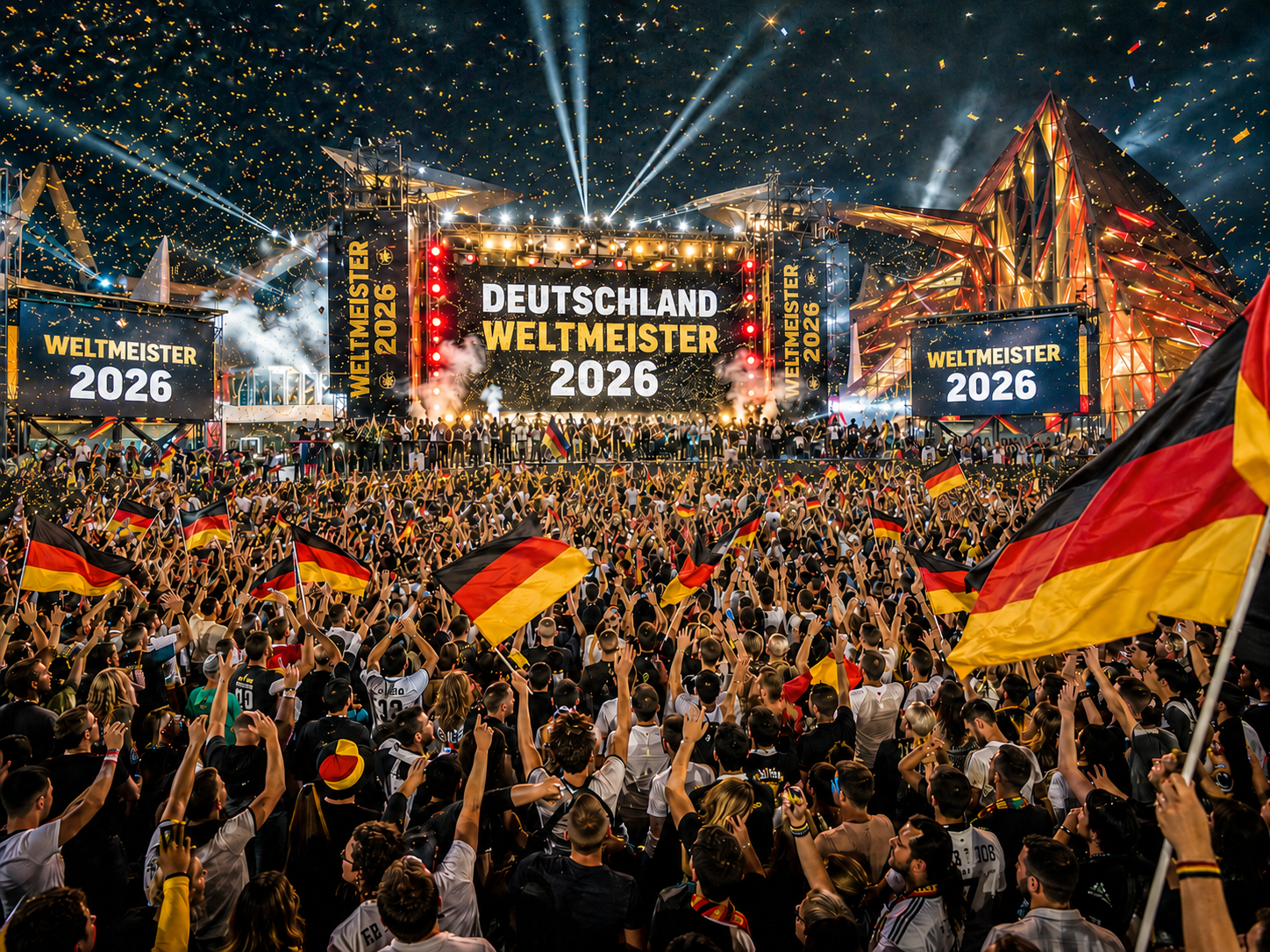
AI-generated image of people celebrating in a fictional place.
Image 2, human-sized capybaras: Here, the human-sized capybaras make it immediately clear that this is not a realistic depiction of an actual event. The image is synthetic AI-generated content, but from this perspective it is not a deepfake.
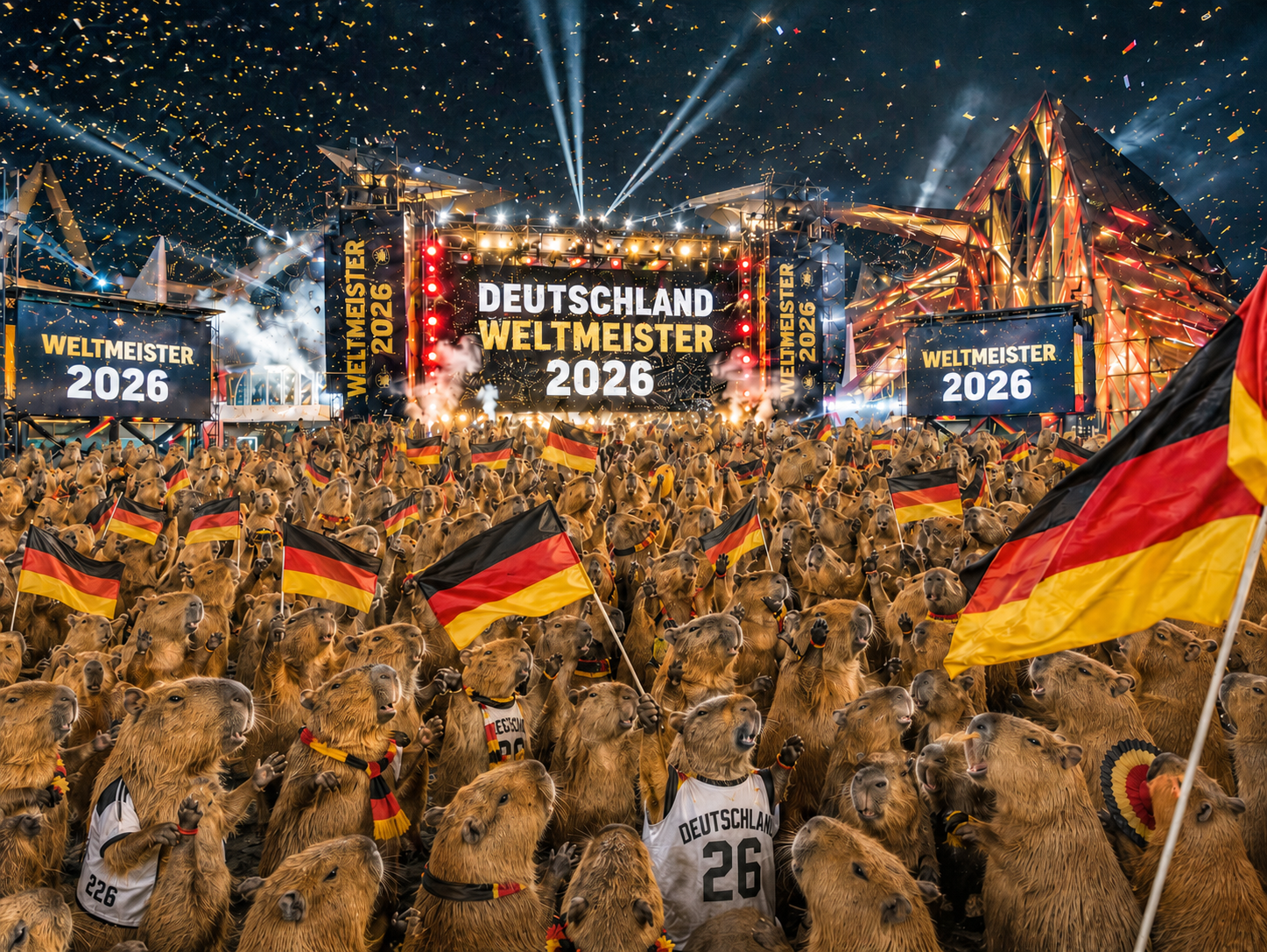
AI-generated image of celebrating, human-sized capybaras in a fictional place.
Whether content qualifies as a deepfake therefore depends on resemblance and realism, not merely on the technology used. This boundary is precisely where the current legal uncertainty lies.
Schedule your initial consultation
Describe your situation to us in a no-obligation phone call, and our lawyers will work with you to find the best solution.
What must deployers disclose under the labelling obligation?
Deployers of an AI system that generates or manipulates deepfakes must disclose, under Article 50(4) of the AI Act, that the content has been artificially generated or manipulated. Article 50(5) sets out how this disclosure must be made.
According to the Commission’s understanding, the labelling must meet the following requirements:
- Clear and distinguishable. Clear means that the information is noticeable and easy for the affected person to understand, including children and persons with accessibility needs. Distinguishable means that it can easily be separated from other information and from the presentation context.
- Perceptible without technical aids. The labelling must be visible or audible. A purely machine-readable marker is not sufficient on its own.
- At the latest upon first exposure. The disclosure must be available to every natural person when they first come into contact with the system or the output.
- Accessible. Directive (EU) 2016/2102 and the European Accessibility Act, Directive (EU) 2019/882, are relevant here. Article 50 does not create additional requirements of its own; deployers must assess the applicability to their product themselves.
A disclosure made exclusively in terms and conditions, URLs, documentation or hidden menu layers is expressly insufficient. Such notices may supplement contextual labelling, but they cannot replace it.
This becomes particularly clear in the case of live broadcasts: a one-off notice is not sufficient. The disclosure must be provided continuously so that viewers joining later can also perceive it. Labelling only at the end of the interaction is not sufficient.
The key point is therefore not only that you label the content, but how visible and timely that labelling is.
What exception applies to artistic and satirical works?
A reduced transparency obligation applies to artistic, creative, satirical or fictional works. According to Recital 134, the disclosure must not hamper the display or enjoyment of the work.
The draft links this exception to three conditions:
- The deepfake is part of an evidently artistic, creative, satirical or fictional work or programme.
- This character is clearly recognisable from the format, context and audience expectations. If purely informative or commercial purposes predominate, the exception does not apply.
- Appropriate protection of the rights and freedoms of third parties, such as personality rights and intellectual property rights, remains unaffected in accordance with Union law.
In practice, this means that a political parody clearly recognisable as satire may fall within the exception and does not require an intrusive notice in the middle of the image. An AI-generated advertising video, by contrast, leaves this category as soon as the commercial purpose predominates.
The exception therefore does not release deployers from the obligation to label, but merely permits a more restrained form of disclosure that does not interfere with the enjoyment of the work.
What matters in the case-by-case assessment?
Whether AI-generated content is subject to a labelling obligation at all is not determined in the abstract, but on the facts of the specific case. An intention to deceive on the part of the deployer is not required. What matters is whether the content would falsely appear authentic to a person, assessed against the actual or foreseeable composition of the specific audience.
In this respect, the draft deliberately departs from Article 50(1): the relevant benchmark is not a hypothetical average person, but the specific audience. If content is aimed at children, older people or persons with lower media literacy, these groups must be given particular consideration.
At the same time, the draft recognises a de minimis threshold. Minor technical AI manipulation, such as a mere adjustment of exposure, may remain below the materiality threshold and therefore not trigger a labelling obligation. This too depends on the individual case.
For practical purposes, this means that anyone publishing AI-generated content should understand the specific audience and realistically assess the degree of manipulation, rather than relying on a blanket average-person standard.
Conclusion: The labelling requirements under the AI Act are becoming more concrete, but deployers should still act now
The consultation draft provides structured answers for the first time on when AI-generated content qualifies as a deepfake and what disclosure under Article 50(4) of the AI Act should look like. Three points are central: a deepfake requires significant resemblance to a realistic reference point; the labelling must be clear, visible and timely; and a reduced obligation applies to evidently creative or satirical works.
The draft is not binding, and ultimately binding interpretation remains reserved to the Court of Justice of the European Union. However, since the transparency obligations will apply from 2 August 2026, you should already review your AI-assisted content for potential labelling requirements instead of waiting for final clarification.
Frequently Asked Questions (FAQ)
#1 From when will the labelling obligation for deepfakes apply?
The transparency obligations under Article 50 of the AI Act, including deepfake labelling, will become applicable from 2 August 2026. The current draft guidelines from the European Commission are intended to prepare implementation by that date, but are not themselves legally binding.
#2 How must companies label deepfakes?
Companies must label deepfakes in a way that is clear, distinguishable and perceptible without technical aids, meaning visible or audible. The disclosure must be provided at the latest upon first contact; a notice solely in terms and conditions or hidden menus is not sufficient.
#3 Is a purely machine-readable label sufficient?
No. A purely machine-readable marker is not sufficient. According to the Commission’s understanding, the disclosure must be perceptible without technical aids, meaning visible or audible. Machine-readable markings may only be used as a supplementary measure.
#4 Does the labelling obligation also apply to realistic AI avatars?
Yes. Realistic AI avatars and digital replicas of real people fall within the definition of a deepfake. What matters is significant resemblance to a realistic natural person, not the technology used.
#5 Does the deployer need to have an intention to deceive for the obligation to apply?
No. An intention to deceive is not required. The only relevant question is whether the content would falsely appear authentic to the specific audience, taking particular account of especially vulnerable groups.
#6 How should live broadcasts be handled?
In live broadcasts, the disclosure must be provided continuously, not just once at the beginning. This ensures that viewers who join later can also perceive the notice that the content is AI-generated.
Schedule your initial consultation
Describe your situation to us in a no-obligation phone call, and our lawyers will work with you to find the best solution.
Content
- What do the new EU guidelines regulate, and how binding are they?
- When does AI-generated content qualify as a deepfake?
- What must deployers disclose under the labelling obligation?
- What exception applies to artistic and satirical works?
- What matters in the case-by-case assessment?
- Conclusion: The labelling requirements under the AI Act are becoming more concrete, but deployers should still act now
- Frequently Asked Questions (FAQ)
Your experts

